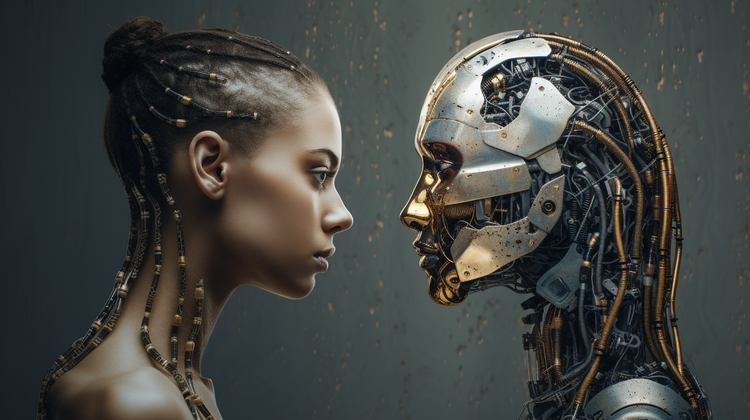
Artificial intelligence has transformed the conversation around marketing. Every week seems to bring another announcement about AI-powered advertising, automated content generation, predictive analytics, or intelligent customer segmentation. The technology is advancing at a remarkable pace, leading many professionals to ask the same question:
Will AI replace marketers?
The more useful question, however, is whether marketers are prepared to work alongside AI.
History suggests that technological revolutions rarely eliminate entire professions. Instead, they redefine them. Accountants didn’t disappear because spreadsheets arrived. Photographers weren’t replaced by digital cameras. Software developers didn’t become obsolete because low-code platforms emerged.
Marketing is following the same pattern.
AI isn’t replacing marketers. It’s replacing repetitive tasks, accelerating workflows, and raising expectations for what skilled professionals can accomplish. The marketers who embrace these changes will become more valuable than ever. Those who rely on yesterday’s methods may find themselves struggling to keep pace.
AI Is Changing Execution, Not Strategy
Modern AI tools can generate headlines, write product descriptions, analyse campaign performance, create audience segments, and even recommend advertising budgets in seconds.
These capabilities are impressive, but they all have one thing in common: they operate within a strategy defined by humans.
AI can produce hundreds of ad variations, but it doesn’t decide:
- which market a business should enter
- how a brand should be positioned
- what makes a product genuinely different
- which customers represent the greatest long-term value
- how a company should respond to changing consumer behaviour
Those decisions require context, business understanding, and judgement.
The future of marketing belongs to professionals who combine AI efficiency with strategic thinking.
Marketing Is Becoming More Analytical
One of the biggest misconceptions surrounding AI is that marketing will become less skilled because software is handling more of the work.
The opposite is happening.
As automation takes over repetitive execution, marketers are spending more time interpreting data, identifying opportunities, and making strategic decisions.
Performance metrics have become more sophisticated. Customer journeys span multiple channels. Attribution models continue to evolve. AI provides enormous amounts of information, but someone still needs to determine what matters.
The marketer of the future looks less like an advertising specialist and more like a business strategist who understands customer behaviour, technology, and growth.
Creativity Has Become More Valuable, Not Less
AI is exceptionally good at producing content based on patterns.
It can generate blog posts, social captions, emails, and advertising copy within seconds.
But creativity isn’t simply producing words or images.
It involves understanding culture, emotion, timing, and human motivation. It means recognising opportunities that don’t yet exist and creating campaigns that resonate beyond predictable patterns.
The most memorable brands rarely succeed because they generate the most content. They succeed because they tell compelling stories, communicate consistently, and create emotional connections with customers.
AI can support that process, but it cannot replace the original thinking behind it.
Businesses that combine AI-assisted production with genuine human creativity will have a significant competitive advantage.
The Biggest Change Is Happening Inside Businesses
AI isn’t only changing marketing departments. It’s changing expectations across entire organisations.
Business owners, executives, product managers, and sales teams increasingly expect marketing to deliver measurable business outcomes rather than simply generate awareness.
This means marketers need a broader understanding of:
- business strategy
- customer acquisition economics
- lifetime customer value
- market positioning
- growth planning
- data interpretation
The role is becoming more integrated with leadership rather than operating as a separate function.
Professionals who understand both marketing and business will become increasingly valuable as organisations continue their AI transformation.
Adaptability Is Becoming the Most Important Skill
Every major technological shift creates uncertainty.
The internet changed advertising.
Social media transformed communication.
Mobile technology reshaped customer behaviour.
Now AI is redefining how digital work gets done.
The professionals who thrive are rarely those who know the most today. They’re the ones who continue learning as technology evolves.
Adaptability has become one of the most valuable career skills available.
Instead of fearing automation, successful marketers are learning how to integrate AI into research, planning, content development, campaign optimisation, and reporting. They spend less time on repetitive tasks and more time solving meaningful business problems.
That shift increases their value rather than diminishing it.
Human Expertise Remains the Competitive Advantage
One interesting consequence of widespread AI adoption is that many businesses now have access to the same tools.
If every company can generate content instantly and optimise campaigns automatically, technology itself stops being a differentiator.
The advantage moves elsewhere.
It moves toward:
- better strategic thinking
- stronger customer understanding
- clearer positioning
- better decision-making
- deeper industry expertise
In other words, AI levels the playing field for execution while increasing the importance of human insight.
The companies that outperform competitors will be those that combine intelligent automation with highly skilled professionals.
Continuous Learning Has Become a Business Requirement
Marketing has always evolved, but AI has accelerated that pace dramatically.
New platforms appear regularly. Existing tools introduce AI-powered features every few months. Customer expectations continue to shift as technology becomes more sophisticated.
For professionals and businesses alike, continuous learning is no longer optional.
Many marketers and business leaders are investing in structured education that combines digital marketing fundamentals with modern AI applications. Rather than chasing every new tool, they focus on understanding the principles that remain valuable regardless of platform changes.
Resources such as Define Digital Academy are helping professionals build those foundations by combining practical digital marketing knowledge with strategies that remain relevant in an AI-driven environment.
The Future Belongs to AI-Enabled Professionals
The conversation around AI often focuses on replacement.
A more realistic view is augmentation.
AI will automate research, accelerate production, improve targeting, and simplify optimisation. It will remove repetitive work that once consumed hours of a marketer’s day.
That creates space for professionals to focus on the activities machines still struggle with: building relationships, understanding customers, developing strategy, solving business problems, and creating original ideas.
Those skills are becoming more valuable, not less.
Related Posts