
Tech

Snow Removal Software Is Becoming a Competitive Moat—But Only If Competitors Cannot Copy the Operation
Snow Removal Software Is Becoming a Competitive Moat—But Only If Competitors Cannot Copy the OperationThe Advantage Starts Before the First Plow Moves A landscaping contractor can buy new snow software this afternoon. So can every competitor in the market. That creates an uncomfortable problem with the idea that technology itself is becoming a competitive moat. Software licenses are available to everyone. Features can be copied. Routing, GPS tracking, customer notifications, photos, and digital logs are increasingly becoming expected capabilities rather than rare advantages. The real moat is what happens when a company turns those capabilities into operating discipline. Consider plow route start delay tracking. Knowing that Route C departed 24 minutes late is useful. Knowing why it happened—and preventing the same delay during the next event—is far more valuable. Perhaps a loader was staged at the wrong yard. Perhaps a subcontractor did not confirm availability. Maybe crews were waiting for updated property instructions. A competitor can purchase the same route software. It cannot instantly reproduce years of clean operating data, disciplined workflows, reliable crews, documented customer expectations, and managers who know how to act on exceptions. That is where technology starts becoming harder to copy. What Snow Software Should Prove A commercial investigation should therefore look beyond whether software can schedule routes or show trucks on a map. The stronger question is whether it improves what the contractor can reliably prove about its operation. Route Readiness and Recovery Routes rarely fail because nobody made a route plan. They fail because conditions change. A truck goes down. Accumulation moves differently across the service area. A customer escalates a property. One crew falls behind while another finishes early. Strong systems should make those deviations visible quickly enough for operations to respond. That means knowing which properties remain open, where capacity exists, what equipment each site requires, and what happens to downstream service windows when work is reassigned. This is the practical value of having one system for storm operations rather than treating dispatch, route status, customer records, and field completion as unrelated datasets. Proof and Billing Continuity The second test starts when the plow leaves. Can the company show when it arrived, what work occurred, which crew performed it, what materials were applied, and whether anything unusual happened? More importantly, can that information travel into billing without somebody reconstructing the storm two days later? A digital service record becomes strategically useful when it supports both customer confidence and revenue capture. Your Customer Does Not Buy the Dashboard Commercial property managers do not award contracts because a contractor owns impressive software. They buy confidence. They want entrances accessible when expected. They want priority areas understood. They want answers when conditions change. They want defensible service records when questions arise. Technology matters only to the extent that it improves those outcomes. Imagine two contractors bidding on a multi-property portfolio. Both own modern plow equipment. Both have experienced operators. Both quote similar pricing. One says, “We track our crews.” The other can explain how route progress is monitored, how exceptions are escalated, how service records are captured, how property managers receive updates, and how completed work stays connected to billing. Those are very different sales conversations. The second contractor is not selling software. It is selling operational confidence supported by software. That distinction matters because customer trust is much harder for competitors to imitate than a feature list. Measuring the Competitive Advantage If technology is genuinely producing a moat, management should be able to measure it. Measure Recovery, Not Just Efficiency Route optimization matters, but storms are defined by exceptions. Track how long it takes the operation to recover after a disruption. A truck fails at 2:15 a.m. When is its remaining work reassigned? A priority account requests a return visit. How quickly does the new instruction reach the correct crew? A route falls behind. How long before dispatch notices? Call this Storm Recovery Time. A contractor reducing recovery from forty minutes to twelve has created a meaningful operational advantage, even if the total number of trucks remains unchanged. Measure Promise-to-Proof Performance A second useful metric is the Promise-to-Proof Rate. For every commercial service commitment, ask whether the contractor can connect the promised work to a completed, understandable record without manual investigation. If 100 visits occurred but only 72 have immediately usable timestamps, notes, status, and supporting documentation, the business has a 72% operational proof rate. Improving that number creates benefits across account management, dispute handling, customer retention, and billing. […]

How AI and 3D Visualization Are Changing Home Remodeling Before Construction Begins
Home remodeling used to depend heavily on drawings, material samples, and a homeowner’s ability to imagine how a finished space might look. That is changing. Today, digital design tools can help homeowners explore layouts, compare finishes, understand room proportions, and see proposed changes before construction begins. Artificial intelligence is adding another layer to that process. […]
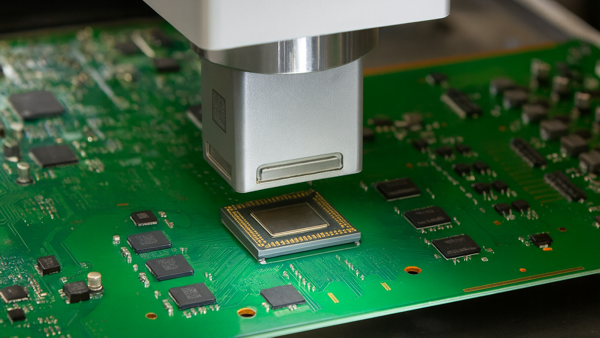
Top 10 BGA Rework & Reballing Services in 2026
Ball Grid Array (BGA) packaging has become the default footprint for high-density components — CPUs, GPUs, FPGAs, memory controllers, and power-management ICs. The advantages are obvious: more I/O in less space and better thermal and electrical performance. The trade-off is that when a BGA fails, you can’t just touch up a few leads with a […]

MultiAgent AI Systems The Next Evolution of Enterprise Operations
Artificial intelligence is rapidly evolving from individual assistants into collaborative networks of specialized AI agents capable of working together to accomplish complex business objectives. These multi-agent AI systems represent the next stage of enterprise transformation, where multiple intelligent agents coordinate decisions, exchange information, and execute business processes with minimal human intervention. Unlike traditional AI applications […]

How AI Turns Old Training Videos Into Microlearning People Actually Finish
I have watched enough internal training videos to know the problem is rarely the knowledge itself. Most of the information is still useful. The real issue is delivery. A twenty-minute onboarding video that felt fine last year can feel painfully long today, especially when an employee only needs one specific answer. That is why I […]

Why We Built Hertz: AI SEO Visibility Is the Channel Most SaaS Businesses Are Ignoring
Consider a scenario that is becoming increasingly common: paid search is performing well, organic rankings are solid, and a content team is publishing consistently. Then a prospect mentions they discovered a competitor through ChatGPT — and had never encountered your brand at all. This is not an isolated incident. It reflects an accelerating pattern throughout […]

Two AI Courses Canadian Professionals Should Consider in 2026
AI Business Professional and Azure AI Fundamentals address two of the most important skills gaps facing Canadian organizations: practical AI adoption and technical AI implementation Artificial intelligence is moving from experimentation into everyday Canadian business operations. The most useful AI course in 2026 therefore depends on what a learner needs to accomplish. Business professionals need […]

How Time-Series AI and Real-Time Process Analyzers Are Changing Industrial Optimisation
Industrial plants already generate enormous volumes of data. Refineries, petrochemical units, gas processing facilities and hydrogen plants run on DCS platforms, APC applications, historians, alarm systems and, in some cases, real-time optimization systems. The data is there. The problem is that much of its value is still detected too late. A process upset rarely begins with one […]

Malaysia Data Centre Boom: Why Southeast Asia’s Next Digital Powerhouse Is Rising Fast
Over the past few years, Malaysia has quietly transformed itself from a regional hosting market into one of the most talked-about digital infrastructure destinations in Asia. Global cloud providers, AI infrastructure operators, and hyperscale developers are all placing significant bets on the country, and the momentum shows no sign of slowing. The Malaysia Data Centre […]

7 Top High-Tech Hotels in Canada: Where Innovation Meets Exceptional Guest Experiences
Canada has earned a reputation for combining breathtaking landscapes with world-class hospitality. Over the past decade, many Canadian hotels have embraced advanced hospitality technology solutions to improve the guest experience, streamline operations, and support sustainability initiatives. From AI-powered guest services and mobile room access to smart energy management systems and immersive digital experiences, these properties demonstrate how […]