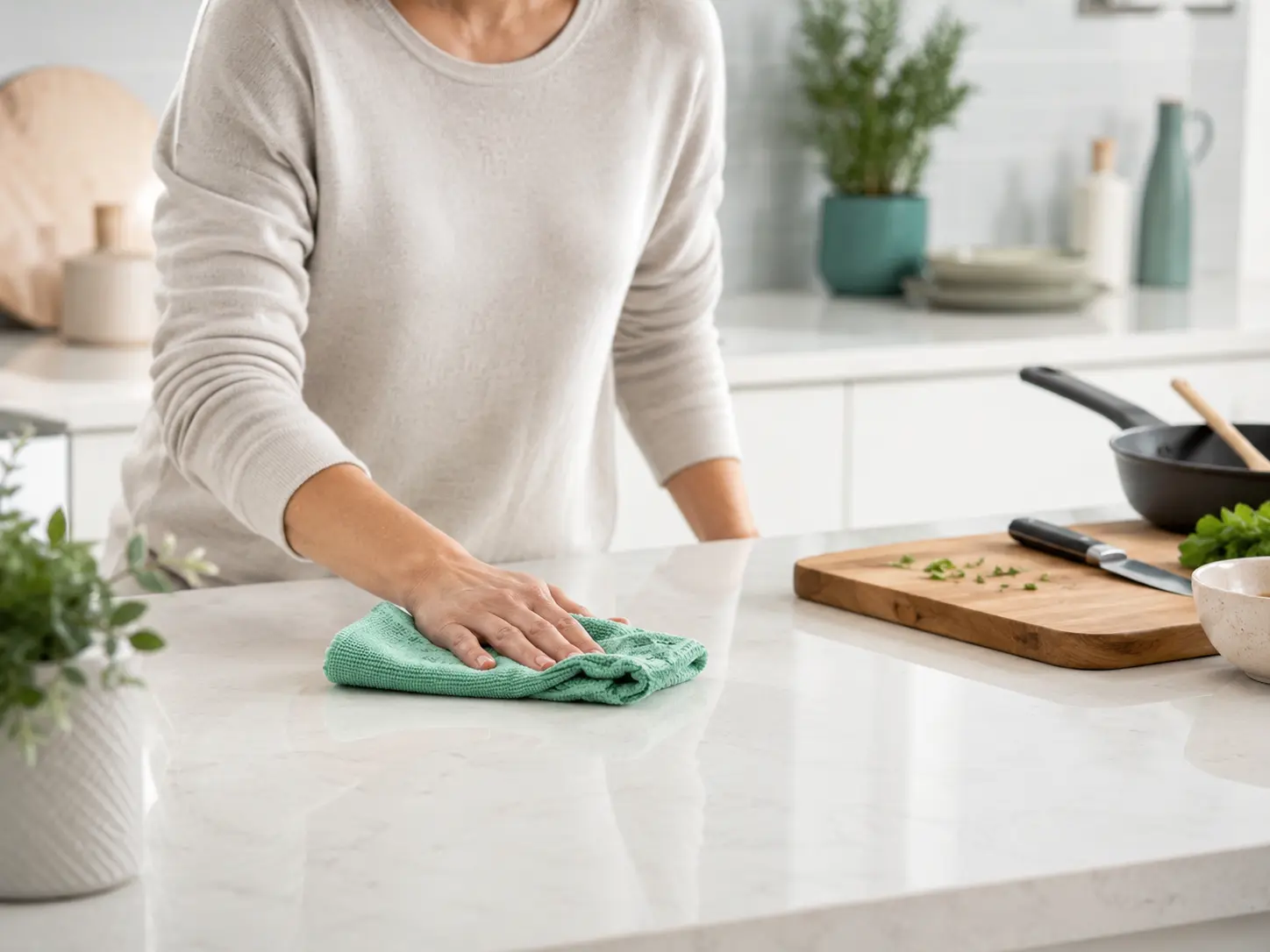
A home can look messy again surprisingly soon after a major cleaning session. Dirty home surfaces often return because dust, spills, fingerprints, crumbs, and everyday clutter accumulate continuously while cleaning happens only occasionally.
A simpler routine usually works better than repeatedly waiting until the whole house feels overdue.
Clean According to How Surfaces Are Used
Not every surface needs the same schedule. A kitchen counter used several times a day needs more regular attention than the top of a bookcase in a quiet room.
Start by noticing where dirt actually collects. Entry tables, bathroom counters, appliance handles, dining surfaces, and frequently touched areas tend to show use quickly.
General homekeeping reading can provide inspiration, but your own household patterns should determine which surfaces receive the most attention.
Remove Loose Mess Before Wiping
Cleaning becomes slower when bottles, papers, dishes, chargers, and decorative items have to be moved individually every time.
Clear the surface first. Put obvious items away, discard trash, and group anything that still needs a home. Wiping an open counter takes seconds compared with cleaning around twelve separate objects.
Work From Cleaner Areas Toward Dirtier Ones
Using the same cloth on a relatively clean table and then returning to it after wiping a greasy cooking area can spread residue instead of removing it.
Separate cloths or cleaning stages make the process easier to control.
Match the Method to the Material
More cleaning product does not automatically produce a cleaner result. Excess liquid can leave streaks, residue, or unnecessary moisture.
Wood, stone, painted surfaces, glass, stainless steel, and electronics may have different care requirements. Product labels and manufacturer instructions should take priority where a finish could be damaged.
Broader practical household discussions can be useful for ideas, but material-specific instructions matter whenever a surface needs specialized care.
| Surface Problem | Simple Response | Routine |
|---|---|---|
| Loose dust | Dry dusting or suitable cloth | Regular light pass |
| Fresh spill | Wipe promptly | As needed |
| Fingerprints | Appropriate damp cleaning | High-touch areas |
| Clutter buildup | Remove items first | Short daily reset |
Use Small Resets Instead of Marathon Cleaning
A five-minute kitchen reset after dinner can prevent dried spills and crowded counters the next morning. The same idea works in bathrooms, workspaces, and living rooms.
Attach the reset to an existing routine. Wipe the bathroom counter after the final evening use, clear the dining table after meals, or tidy the entry surface when returning shoes and keys.
Useful simple home-care ideas fit naturally into this approach because consistency usually matters more than making each cleaning session elaborate.
What Makes Cleaning Routines Fail
A routine becomes difficult to maintain when it demands perfection. Trying to deep-clean every room every day creates more work than most households can reasonably sustain.
Another mistake is treating clutter and dirt as exactly the same problem. A spotless counter covered with papers still looks untidy, while an empty counter may still need cleaning. Give objects a storage home and give actual surfaces an appropriate cleaning routine. Solving both problems separately keeps the process manageable.
Frequently Asked Questions
How often should household surfaces be cleaned?
Frequency depends on use, material, household size, and the type of mess. Frequently touched or food-preparation surfaces usually need attention more often than decorative surfaces that receive little contact.
Is it better to clean one room at a time?
Either approach can work. Room-by-room cleaning suits focused sessions, while task batching—such as dusting several rooms together—may feel faster. Choose the system you are most likely to maintain.
Why do surfaces still look streaky after cleaning?
Too much product, an unsuitable cleaner, dirty cloths, or leftover residue can cause streaking. Follow the product and surface instructions and use clean materials rather than repeatedly adding more cleaner.
Build a Routine You Can Repeat
A cleaner-looking home doesn’t require turning every weekend into a major project. Focus on the surfaces that collect mess fastest, clear objects before wiping, use suitable cleaning methods, and reset high-use areas regularly.
A modest routine performed consistently usually creates better day-to-day results than occasional bursts of exhausting cleaning.
Related Posts