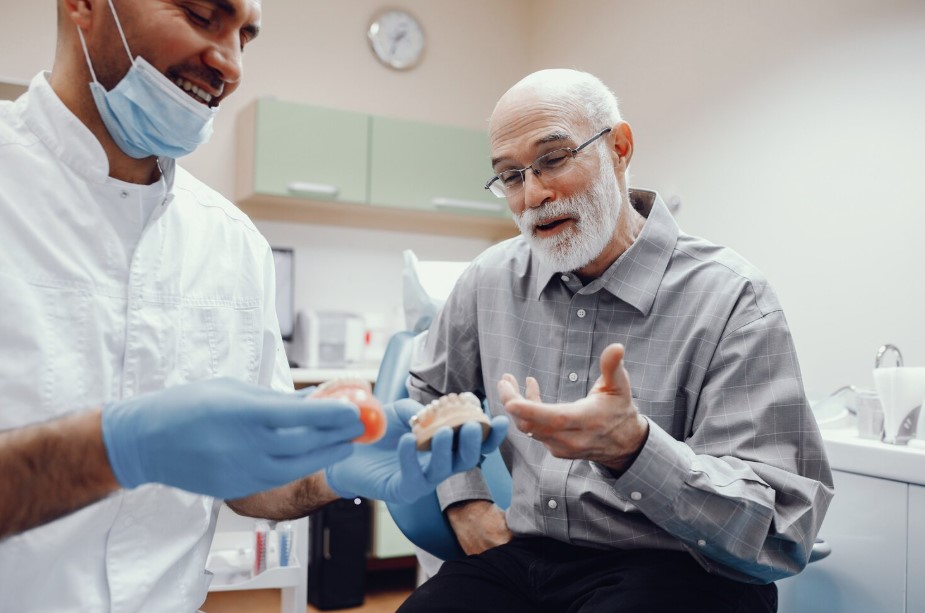
Losing one or more teeth can affect more than your smile. Missing teeth may make chewing difficult, affect speech, change how the remaining teeth function, and influence confidence in everyday situations.
Fortunately, several tooth replacement options are available. Two of the most common are dental implants and dentures. While both can help replace missing teeth, they work in very different ways and may be suitable for different situations.
So, which is better: dental implants or dentures?
There is no single answer for everyone. The right option depends on factors such as the number of missing teeth, jawbone health, overall oral health, lifestyle, treatment preferences, and budget.
What Are Dental Implants?
Dental implants are replacement tooth roots that are placed into the jawbone. After the implant integrates with the surrounding bone, a dental restoration such as a crown, bridge, or implant-supported denture can be attached.
A typical implant restoration has three main components:
- Implant: The artificial tooth root placed in the jawbone
- Abutment: The connector between the implant and restoration
- Restoration: The visible replacement tooth or teeth
Because implants are anchored in the jawbone, they are designed to provide a stable foundation for replacement teeth.
Dental implants can be used to replace a single missing tooth, several missing teeth, or support certain types of full-arch restorations.
What Are Dentures?
Dentures are removable dental appliances designed to replace missing teeth and surrounding oral structures.
Depending on the patient’s needs, dentures may be:
- Complete dentures, which replace an entire arch of teeth
- Partial dentures, which replace several missing teeth while some natural teeth remain
Traditional dentures are removable, meaning they can be taken out for cleaning and typically removed while sleeping.
Dentures can restore the appearance of missing teeth and help improve chewing and speech. They are also generally less invasive than implant treatment.
Dental Implants vs. Dentures: The Main Differences
Although both options replace missing teeth, there are several important differences.
| Factor | Dental Implants | Dentures |
| Placement | Anchored into the jawbone | Rest on the gums |
| Removable | Generally fixed, depending on restoration | Yes |
| Treatment process | Usually requires multiple stages | Generally simpler and faster |
| Bone support | Helps provide stimulation to the jawbone | Does not replace the function of a tooth root |
| Maintenance | Similar to caring for natural teeth, with additional implant-specific cleaning | Requires removal and cleaning |
| Longevity | Can provide long-term tooth replacement with proper care | May need adjustment or replacement over time |
| Initial investment | Generally higher | Generally more affordable |
| Suitability | Requires adequate conditions for implant placement | Can be suitable for many patients who cannot or do not want implants |
These differences are important, but they do not automatically make one option better than the other.
Which Option Looks More Natural?
Both modern dentures and dental implants can provide aesthetically pleasing results.
Dental implants are designed to replace the tooth root as well as the visible tooth, which can help create a stable and natural-looking restoration.
Dentures can also be designed to closely resemble natural teeth and gums. Advances in dental materials have improved their appearance compared with older denture designs.
The final appearance depends on factors such as the restoration used, the patient’s anatomy, treatment planning, and the dental professional’s approach.
Which Option Feels More Secure?
Dental implants are anchored into the jawbone, so they generally provide greater stability than traditional removable dentures.
Traditional dentures rest on the gums and can sometimes move while eating or speaking, particularly if the fit changes over time.
Implant-supported dentures can provide another option for patients who want the benefits of a removable or full-arch restoration with additional stability.
The appropriate solution depends on the patient’s individual dental situation.
How Does the Treatment Process Compare?
The treatment process is another major difference between implants and dentures.
Dental Implant Treatment
Implant treatment usually takes place over several stages.
First, the dentist evaluates the patient’s oral health and determines whether there is enough bone and healthy tissue to support an implant. In some situations, additional procedures may be recommended before implant placement.
The implant is then surgically placed into the jawbone. A healing period follows while the implant integrates with the surrounding bone.
Once healing is complete, the abutment and final restoration can be placed.
The complete process can take several months, depending on the patient’s individual circumstances and whether additional procedures are required.
For patients considering implants, understanding each stage can make the process easier to plan. A detailed resource on the dental implant process can provide additional background on what patients may experience during treatment.
Denture Treatment
Denture treatment generally involves taking impressions or digital scans of the mouth and designing a restoration that fits the patient’s anatomy.
The dentist and dental laboratory work together to create the denture. Once it is ready, the dentist checks the fit and makes adjustments as needed.
Patients may need some time to adapt to speaking and eating with new dentures. Adjustments may also be required as the mouth changes over time.
What About Jawbone Health?
Jawbone health is an important consideration when comparing tooth replacement options.
Natural tooth roots stimulate the surrounding jawbone. When a tooth is lost, that stimulation decreases, and bone loss can occur over time.
Dental implants are placed into the jawbone and can provide stimulation through the implant structure.
Traditional dentures do not replace the function of a natural tooth root. As a result, changes in the jawbone can continue over time, potentially affecting denture fit.
This is one reason why a dentist may evaluate bone levels before recommending a particular tooth replacement option.
Which Option Is Easier to Maintain?
Both implants and dentures require regular care.
Dental implants should be cleaned regularly, just like natural teeth, while paying attention to the areas around the implant and restoration. Regular dental examinations are also important for monitoring oral health.
Dentures should be removed and cleaned according to the dentist’s instructions. Patients should also keep the mouth and gums clean and attend regular dental visits.
Good oral hygiene and professional monitoring can help protect both the replacement teeth and the remaining natural teeth.
Which Option Is More Affordable?
Cost is an important consideration when comparing tooth replacement options.
Traditional dentures generally have a lower initial cost than dental implants. Implant treatment typically involves a larger upfront investment because it may include surgery, implant components, healing time, and the final restoration.
However, cost should not be the only factor in the decision.
Patients should consider the expected longevity, maintenance requirements, functionality, comfort, and overall treatment goals of each option.
The total cost can also vary significantly depending on the number of teeth being replaced and whether additional procedures are required.
Who May Be a Good Candidate for Dental Implants?
Dental implants may be an option for people who:
- Have one or more missing teeth
- Have adequate bone or can undergo procedures to improve bone support
- Have healthy oral tissues
- Are able to maintain good oral hygiene
- Are willing to complete a multi-stage treatment process
Certain medical or lifestyle factors may affect implant treatment. A dental examination is necessary to determine whether implants are appropriate for an individual patient.
Who May Benefit From Dentures?
Dentures may be appropriate for people who:
- Are missing several or all teeth
- Want a removable tooth replacement
- Prefer a less invasive treatment option
- Are not suitable candidates for implants
- Want to replace missing teeth without undergoing implant surgery
Partial dentures can also be an option when some natural teeth remain.
Again, suitability depends on the patient’s individual oral health and treatment goals.
Can You Have Both Dental Implants and Dentures?
Yes. Dental implants and dentures are not always competing options.
Some patients may benefit from implant-supported dentures. In this approach, implants are used to provide additional support for a denture.
Implant-supported dentures can help improve stability compared with traditional removable dentures while still replacing multiple missing teeth.
The number and placement of implants depend on the patient’s anatomy, type of restoration, and treatment plan.
So, Which Is Better: Implants or Dentures?
Dental implants may be preferable for patients who want a more stable, long-term tooth replacement solution and are suitable candidates for implant treatment.
Dentures may be preferable for patients who want a removable option, need to replace many or all teeth, prefer a less invasive approach, or have circumstances that make implants unsuitable.
There is no universal “best” choice.
A dentist should evaluate factors such as:
- Number and location of missing teeth
- Jawbone condition
- Gum health
- Remaining natural teeth
- Overall oral health
- Treatment goals
- Budget
- Lifestyle and personal preferences
The final decision should be based on a personalized dental assessment rather than cost or appearance alone.
Questions to Ask Your Dentist
Before choosing between implants and dentures, consider asking:
Am I a suitable candidate for dental implants?
Your dentist can evaluate bone levels, gum health, oral hygiene, and other factors that may influence implant treatment.
Would traditional or implant-supported dentures be more appropriate?
The answer depends on the number of missing teeth, anatomy, and treatment objectives.
How long will my treatment take?
Implants generally require a longer treatment timeline, while dentures may be completed more quickly.
What will the total treatment cost be?
Ask for an explanation of all expected costs, including examinations, procedures, restorations, and follow-up care.
How should I care for the replacement teeth?
Understanding maintenance requirements can help you protect your investment and maintain good oral health.
Final Takeaway
Dental implants and dentures can both restore missing teeth, but they offer different advantages.
Implants provide a fixed foundation and can offer excellent stability and long-term function for suitable candidates. Dentures provide a removable and generally more affordable way to replace multiple or all missing teeth.
The right choice depends on your oral health, bone condition, number of missing teeth, lifestyle, treatment preferences, and budget.
Rather than choosing based on a single factor, discuss your options with a qualified dental professional. A personalized evaluation can help determine which tooth replacement approach best fits your needs.
For patients exploring comprehensive dental care and tooth replacement options, Aurora Family Dentistry provides information and treatment options to help patients make informed decisions about their oral health.
Related Posts