Contaminated land should not be cleaned by simply excavating whatever looks suspicious. The site first needs enough reliable information to show what may be present, where it is located, how people or the environment could be exposed, and what requirements govern the cleanup.
EPA’s Brownfields guidance treats site assessment as a foundation for understanding contamination and planning appropriate cleanup or reuse.
Establish Existing Conditions First
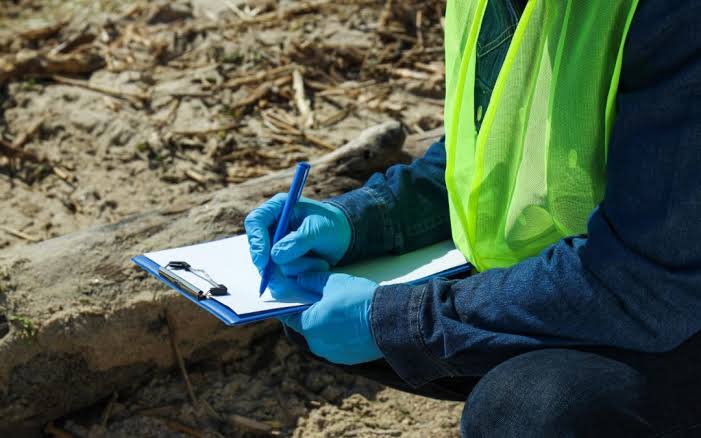
A strong record begins before remediation changes the property. Photographs, maps, historical information, previous environmental reports, sampling data, waste records, tank information, and observations from the field can help establish baseline conditions.
EPA describes Phase I assessments as historical and property-condition reviews, while Phase II work can include sampling to identify contaminant types, concentrations, and affected areas.
Match Investigation to Future Use
Cleanup decisions can depend partly on how the property will be used. EPA explains that risk-based cleanups may consider anticipated residential, commercial, industrial, or recreational use when determining protective measures.
Property stakeholders researching liability may review environmental law topics, but responsibility for contaminated land can involve fact-specific federal and state rules requiring professional interpretation.
Create a Defensible Sampling Record
Sampling should answer specific questions rather than produce disconnected laboratory numbers. Locations, depths, substances tested, collection procedures, laboratory methods, and quality controls all affect how results can be interpreted.
| Documentation | Main Purpose | Common Use |
|---|---|---|
| Site history | Identify possible sources | Investigation planning |
| Sampling map | Locate tested areas | Define contamination |
| Laboratory report | Record analytical results | Cleanup decisions |
| Photos and field notes | Preserve conditions | Project documentation |
EPA notes that screening levels and cleanup levels serve different purposes and may vary with contaminant, exposure pathway, property use, and site conditions.
Develop the Cleanup Approach From Evidence
Removing every trace of contamination is not always the selected remedy. EPA explains that risk-based approaches may leave some contamination in place while relying on engineering controls, institutional controls, or land-use restrictions to limit exposure.
Broader UK publishing resources can provide general environmental reading, but they should not be confused with the state, Tribal, or federal program overseeing a particular U.S. cleanup.
Track Material Leaving the Site
Excavated soil and other remediation wastes can create a second documentation problem. Project teams should determine applicable characterization, transportation, disposal, manifest, and receiving-facility requirements before material is moved.
Records should connect excavation areas with waste characterization and final disposition.
Verify the Site After Remediation
Completion should be demonstrated against the cleanup requirements established for the project. Depending on the program and remedy, this can involve confirmation sampling, documentation of imported clean material, construction records, institutional controls, or long-term monitoring.
People following general news publications may see environmental cleanup described simply as removal. Actual remediation can involve several different approaches selected according to contamination and exposure conditions.
Where Cleanup Projects Commonly Lose Control
Starting earthwork before defining contamination can spread affected soil, complicate waste management, and destroy information about where material originated.
Another error is assuming that excavation automatically closes the environmental issue. Remaining soil, groundwater, vapor pathways, documentation requirements, and future-use restrictions may still need attention.
Frequently Asked Questions
Does every contaminated property require complete soil removal?
No. The appropriate remedy depends on the regulatory program, contaminants, exposure pathways, intended use, site conditions, and applicable cleanup standards.
What is the difference between Phase I and Phase II assessment?
A Phase I generally investigates property history and potential environmental conditions without routine intrusive sampling. Phase II work may use soil, groundwater, or other sampling to evaluate suspected contamination.
Why are photographs important before remediation?
They preserve visible site conditions, locations, structures, storage areas, staining, excavation zones, and other information that may no longer be observable once work begins.
Preserve the Evidence Before Changing the Site
Successful remediation starts with understanding the property rather than immediately moving soil. Document baseline conditions, define investigation objectives, connect cleanup decisions to reliable data, and confirm regulatory expectations before irreversible work begins.
This article provides general informational material and is not a substitute for legal, environmental, engineering, or regulatory advice.
Related Posts