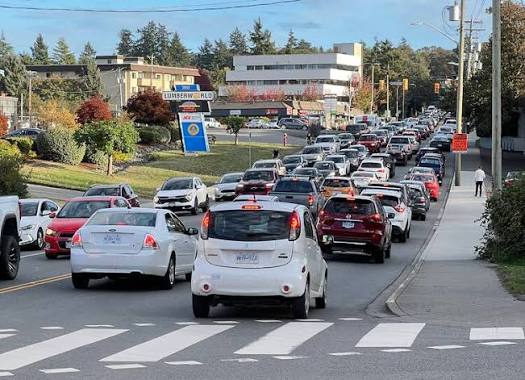
A driver following too closely can create pressure, but speeding up, brake-checking, or arguing rarely improves the situation. The safer response is usually to increase the space in front of your own vehicle and allow the aggressive or impatient driver to pass when a safe opportunity appears.
Your goal is not to teach the other driver a lesson. It is to create more room for mistakes.
Why More Space Ahead Helps
When someone is close behind, you have less control over their stopping distance. What you can control is how much room exists between you and the vehicle ahead.
Increasing that gap allows you to brake more gradually if traffic slows. Gentle braking gives the tailgating driver behind you more time to react and reduces the chance of a chain collision.
Keep Your Driving Predictable
Maintain a steady speed that fits the road, traffic, and posted rules. Avoid unnecessary acceleration, sudden braking, or repeated lane changes designed to respond to the driver behind you.
Good vehicle management habits are built around predictable decisions rather than emotional reactions. The same principle works well when another driver is behaving impatiently.
Avoid Brake-Checking
Deliberately braking to intimidate a close follower can turn an irritating situation into a collision. It may also escalate anger between drivers.
If traffic requires you to slow, do it smoothly whenever possible. Your focus should remain on controlling your own vehicle rather than controlling the behavior of the person behind you.
Let the Other Driver Pass Safely
If another lane is available and changing lanes is safe, moving aside can end the interaction quickly. On a single-lane road, wait for a suitable turnout, passing area, or other legal place where the faster driver can continue.
Awareness of route and roadway conditions can help you recognize safer opportunities to create separation. Do not pull onto a dangerous shoulder or make a rushed maneuver simply because another driver is impatient.
| Reaction | Likely Effect | Better Choice |
|---|---|---|
| Speeding up | Raises overall risk | Hold safe speed |
| Brake-checking | May cause collision | Brake normally |
| Arguing or gesturing | Can escalate conflict | Stay disengaged |
| Creating space ahead | Adds reaction time | Preferred response |
Keep Your Vehicle Ready to Respond
A well-maintained vehicle cannot prevent another person from tailgating, but it can make your own responses more predictable. Brakes, lights, windshield visibility, and tires all matter when traffic conditions change quickly.
Routine tire maintenance guidance belongs within that wider safety picture. Reliable grip and proper maintenance support controlled steering and braking when you need to create distance without making abrupt movements.
What Makes Tailgating Situations Worse
Drivers often make the problem worse by watching the rearview mirror constantly. Knowing the other vehicle is there matters, but focusing on it too much can pull attention away from hazards developing ahead.
Another mistake is matching aggression with aggression. Gestures, repeated braking, blocking a passing attempt, or deliberately slowing to provoke the other driver can extend the conflict.
The safest outcome is usually separation. Give yourself room, stay predictable, and let the interaction end as soon as conditions safely allow.
Frequently Asked Questions
Should I speed up when someone is tailgating me?
Not simply because another driver wants to go faster. Maintain a speed appropriate for current conditions and create an opportunity for the following vehicle to pass safely when possible.
Is it safer to tap my brakes as a warning?
Deliberately using the brakes to intimidate or punish another driver can increase collision risk. If you need to slow, brake smoothly and normally while maintaining as much space ahead as practical.
What should I do if the driver follows me after passing?
Avoid confrontation. Stay on public, well-traveled roads and do not drive directly to a private destination if you feel threatened. Contact local emergency services when you believe there is an immediate danger.
Focus on Separation, Not Winning
A tailgating driver can be frustrating, but your safest response is based on space rather than emotion. Increase the gap in front of you, make smooth decisions, and allow the other vehicle to move away when conditions permit.
The sooner the conflict ends, the sooner you can return your full attention to ordinary driving.
Related Posts